
Can technology outsmart Wall Street pros?
AI investment tools scan market data using machine learning and smart algorithms to spot trends quickly. These systems cut through market noise and help investors make clear decisions that boost returns. They turn large amounts of data into simple, actionable insights that change how you trade. By streamlining research, lowering risk, and promising better performance than traditional methods, these tools are reshaping investment strategies.
Here are five AI investment tools driving superior returns.
ai investment tools Spark Superior Returns
AI investment tools use machine learning and data analytics to make investing easier. They sift through large sets of market data, detect trends, and cut out emotional bias so that traders and investors rely on clear data signals. For example, a trader might use these tools to spot undervalued stocks quickly and adjust a portfolio with confidence.
These tools operate with four key parts: machines, data, models, and outcomes. Machines are the computers that handle large amounts of information. Data includes both historical and live market figures. Models are the statistical methods used to predict price changes and give probabilistic advice. Outcomes are the clear, actionable tips such as trade signals or portfolio tweaks.
Both retail and professional investors benefit from using AI. The technology speeds up research, improves portfolio management, and refines trade execution with timely market recommendations. One trader noted, "I gain insights in minutes that once took hours of manual analysis." By reducing human error and boosting accurate data interpretation, AI investment tools are driving superior returns in various trading environments.
Categories of AI Investment Tools: From Robo-Advisors to Quant Platforms
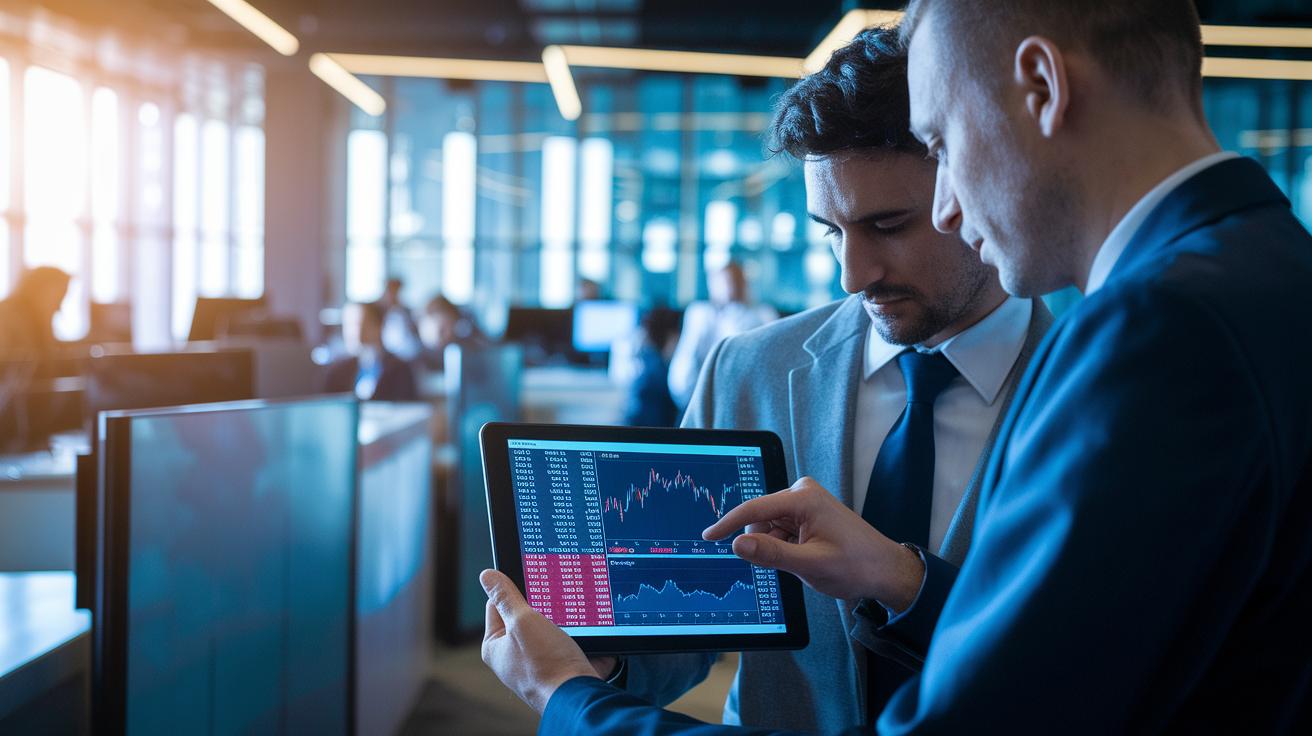
Investors and traders now have access to a variety of AI tools that simplify portfolio management and sharpen market insights. These tools cover needs like automatic rebalancing and market forecasting, enabling quick and precise responses to financial events.
Robo-Advisory Platforms
Robo-advisors adjust portfolios automatically based on set risk levels. For example, Magnifi offers real-time portfolio analysis and a comprehensive financial search tool that helps investors set strategies and adjust allocations as markets move.
Algorithmic Trading Solutions
These tools automate trade execution using pre-set strategies. Some use closed models, while others let users review the underlying logic. Prospero.ai, for instance, provides clear stock picks and daily insights, making it popular among data-driven traders.
Portfolio Optimization Systems
These systems focus on evaluating risk and fine-tuning asset allocation. They continuously monitor market data and adjust portfolios to manage risk levels and exposure during market events.
Research and Forecasting Engines
Research engines like Public Alpha use trends and data insights to generate chat-driven recommendations. By processing large amounts of information, they convert forecasts into ready-to-act strategies.
Comparing Top AI Investment Tools: Features and Use Cases
Investors and traders now have a suite of AI tools designed to tackle distinct market challenges. These platforms pair data analytics with predictive models to help inform smarter trade decisions. Some tools zero in on real-time news, while others automate technical analysis to spot trends swiftly. For example, TradeEasy AI mixes live news feeds with sentiment analysis in a conversational format that translates market shifts into practical insights. Meanwhile, TrendSpider automates chart pattern recognition and backtesting, making it a go-to for technical traders.
| Tool | Primary Function | Key AI Feature | Ideal Users |
|---|---|---|---|
| TradeEasy AI | Real-time news aggregation and sentiment analysis | Conversational assistant | News-driven traders, fundamental analysts, portfolio managers |
| TrendSpider | Technical pattern recognition and strategy backtesting | Automated technical analysis | Systematic traders, technical analysts |
| Trade Ideas (Holly AI) | Automation of statistical trading models | Black box model processing | Active day traders, data-driven strategists |
| QuantConnect | Scalable coding, backtesting, and deployment | Robust algorithmic infrastructure | Quant developers, coding-savvy traders |
| TradingView | Collaborative charting and community indicators | Cloud-based alerts and social insights | Discretionary traders, chart enthusiasts |
Each platform meets a specific trading challenge. By selecting a tool that matches your approach, you can improve technical analysis, cut down on human error, and react faster to market news. In short, pairing the right AI investment tool with your strategy can streamline your workflow and potentially drive better returns.
Implementing AI Investment Tools: A Step-by-Step Guide

Using AI investment tools can cut down on manual errors and save you time by turning raw market data into clear trade signals. When you connect real-time market and account data with automated analytics, huge data sets become actionable insights. One trader said, "I set my model parameters once and then watch the system turn market shifts into signals."
Follow these steps to get started:
-
Define your investment goals and data needs.
Begin with a clear plan that outlines your targets and the type of data required to keep your strategy focused. -
Choose an AI tool that fits your strategy and matches your risk tolerance.
-
Set up real-time market and account data feeds.
-
Adjust your model parameters for risk and prediction to align with your trading style.
-
Test your strategy using historical data to ensure it performs consistently.
-
Monitor live performance and review AI signals regularly to avoid overreliance on automation.
Following these steps will help you implement AI tools that offer strong decision support and insights to guide your trades in changing markets.
Case Studies: Real-World Success and Caution with AI Investment Tools
A retail trader using TrendSpider's automated pattern recognition cut manual chart work in half over three months while boosting signal accuracy. The system handled routine tasks, freeing up time to fine-tune strategy and dive deeper into market analysis. One trader explained, "I now spend less time scanning charts and more time making informed moves." This example shows how AI tools can simplify workflows and lower errors for better results.
Conversely, Charlotte Street Capital, a hedge fund, ran into trouble when its unsupervised quantitative models created risky exposures during sudden market swings. Without enough human oversight, the model generated untested risks and forced the fund to shut down its AI operations. A seasoned analyst remarked, "Even sophisticated tools require a steady human check." This case highlights the need for continual human input to balance the advanced potential of AI with careful risk management.
Expert Insights and FAQs on AI Investment Tools

Industry Expert Perspectives
Analysts say that AI investment tools work best when used to support human judgment rather than replace it. One expert noted, "The key is to blend AI's rapid data crunching with experienced market insight." They point out that while machines, data, and models provide probabilistic guidance, successful investing still depends on human analysis to interpret complex market conditions and adjust strategies as needed.
Common Questions about AI Investment Tools
Are these tools beginner-friendly?
Many platforms offer simple interfaces and clear guidance, making them accessible for newcomers. A basic grasp of market principles and access to real-time data, like U.S. stock trading feeds, can boost their effectiveness.
What data feeds do I need?
Investors should link real-time market data with their trading accounts to give AI tools the most accurate picture of current conditions and trigger timely alerts.
How do I balance AI outputs with manual review?
Experts advise using AI insights as one part of a wider investment strategy. Regular human oversight is needed to verify AI suggestions, adjust risk settings, and ensure that decisions blend both the numbers and the market's qualitative signals.
Final Words
In the action, we examined how ai investment tools empower smarter choices by processing data into actionable insights. The post broke down key categories, detailed practical steps for integration, and highlighted real-world outcomes. We saw how predictive algorithms and technical models offer clear benefits and potential challenges. Expert insights reinforced that blending these tools with human review can drive better results. Overall, the approach remains positive, giving investors the edge needed to capitalize on market opportunities.
FAQ
What free AI investment tools are available?
The free AI investment tools available provide basic stock analysis and market trend assessments at no cost. They help investors start small, while advanced features often come with subscription options.
What are the best AI investment tools?
The best AI investment tools combine automation with real-time data analysis to offer portfolio management, trade signals, and pattern recognition, making them useful for both casual and active investors.
How can Reddit insights help me choose AI investment tools?
Reddit discussions offer real-world experiences, user reviews, and tool comparisons that can help investors evaluate performance and usability of various AI investment tools.
Are AI investment tools beginner-friendly?
AI investment tools for beginners feature intuitive interfaces and guided setups, enabling new investors to test strategies and build confidence while learning market analysis with minimal complexity.
Can I use AI for investing?
AI for investing employs algorithms to analyze large datasets and market patterns, assisting investors with research, trade automation, and reducing bias in decision-making.
What realistic returns should I expect from AI-driven investing?
AI-driven investing aims to improve analysis and execution but does not promise fixed incomes. Investors should be cautious of specific monthly or daily profit claims and focus on steady, long-term growth.
Do AI investment apps actually work?
AI investment apps work by using data analytics and algorithms to generate insights and trade signals. They can streamline decision-making, though success still depends on ongoing review and strategy adjustments.
What are some top AI tools for investment banking and advisory?
Top AI tools for investment banking and advisory integrate advanced analytics with risk assessments and market research. They provide professional-grade insights to support strategic decision-making in high-stakes environments.
What is automated AI investing?
Automated AI investing refers to systems that execute trades, rebalance portfolios, and analyze market trends with minimal human input. These tools streamline operations and help reduce emotional decision-making.