
Can your trading software shape your trading results? In a fast market, the right tool is essential.
• IBKR Pro, IBKR Lite, Webull, and Fidelity each have distinct strengths.
• Some platforms offer rapid order execution, while others provide beginner-friendly interfaces or rich market data.
• Picking the best tool can improve your trading performance.
This article compares key features so you can decide what works best for you.
Comparative Overview of the Best Trading Software
Top trading platforms offer tailored features to suit different trading needs. Interactive Brokers presents IBKR Pro, which provides sub-penny pricing and nearly instantaneous order execution, ideal for active traders who require speed and precision. On the other hand, IBKR Lite features commission-free stock trades designed for retail investors, keeping costs low while ensuring solid market access.
Webull and Fidelity round out the choices. Webull targets beginners and intermediate traders with zero commissions, an easy-to-navigate interface, and essential tools to track live market trends. Fidelity stands out with extensive research resources and data, catering to investors who rely on deep market insights for their decision-making.
Each platform supports stocks, ETFs, options, bonds, and more, offering a flexible tool for every investor style.
| Software | Best For | Key Features | Pricing |
|---|---|---|---|
| IBKR Pro | Active Traders | Sub-penny commissions, fastest order execution | Low fees |
| IBKR Lite | Retail Investors | Commission-free trading, streamlined interface | No commissions |
| Webull | Beginners/Intermediates | Zero commissions, intuitive tools | Free trades |
| Fidelity | Data-Driven Investors | Extensive research resources, market data access | Competitive fees |
IBKR Pro and IBKR Lite focus on rapid, cost-effective trade execution, while Webull meets the needs of those new to trading. Fidelity provides robust research tools for investors who base decisions on detailed market data.
Performance and Low-Latency Execution in Trading Software
Fast order fills and low latency are crucial for traders who need to act quickly. Market players track transaction speed, throughput, and order confirmation to gauge a platform's performance. Even tiny delays can mean the difference between capturing an opportunity and missing a trade.
IBKR Pro offers sub-penny commissions and sub-second execution, giving active traders a clear advantage. By combining low costs with high-speed execution, it helps reduce trading expenses while ensuring orders are filled almost instantly. In trading, milliseconds matter and can significantly alter outcomes.
Mobile tests on iOS and Android show very responsive user interfaces and rapid order placements. These tests confirm that the apps can deliver near-instant trade confirmations, enabling traders to act on the go with consistent reliability. Mobile platforms now match desktop speeds, offering dependable performance no matter where you trade.
Security Measures and Risk Management Tools in Trading Software

Trading platforms use strong encryption to scramble sensitive data during transfers. They also add two-factor authentication, which requires an extra step when signing in to help block fraud and unauthorized access. This keeps every transaction confidential and protects your personal and financial details.
Platforms follow strict rules like margin requirements and the Pattern Day Trader rule, which needs a minimum of $25,000 if you make four or more day trades in five business days. This rule helps prevent overexposure and promotes careful trading. Many systems include automated stop-loss controls that exit trades if prices move against you.
Built-in compliance checks also play a key role by keeping client funds separate for better risk management. Real-time monitoring and alert systems work with these safeguards to maintain a controlled trading environment. Together, these tools protect individual trades and support a more secure overall trading system.
User Interface and Support Resources in Top Trading Software
Traders need a simple interface to act fast under market pressure. Clean designs help users find key functions quickly while reducing errors and building confidence. A clear layout with prominent order entry and watchlist sections can make a big difference in your trading experience.
Customizable dashboards are built for quick execution and easy monitoring. Many platforms let you arrange your workspace with drag-and-drop modules so that order entry, alerts, and market data are always just a click away. This layout minimizes distractions and keeps you focused on your trading strategy.
Top trading platforms now offer a range of free educational tools such as webinars, simulated trading environments, tutorial libraries, and live chat rooms. These resources help both beginners and experienced traders refresh their techniques and test new strategies, ensuring learning never stops.
Dedicated support channels provide fast help through phone, chat, and in-platform help centers. With teams ready to answer questions and resolve issues promptly, you can stay connected to the market with minimal downtime, which is essential for consistent trading performance.
Advanced Charting and Analytical Suites in Trading Software
Advanced analytical tools now replace basic broker charts by offering real-time data and professional-grade features. Traders benefit from built-in backtesting, strategy simulation, and live scanning that help them act fast.
Charting Platforms
Platforms like TC2000 and eSignal provide detailed technical indicators to track trends. Traders can design their own views with layered insights. While eSignal carries a higher subscription fee, both options deliver far more than traditional charts. In simple terms, upgrading your charting is like switching from a paper map to a live GPS.
Stock Scanning Tools
Tools such as Warrior Trading Scanners use five key filters, price range ($2 to $20), volume, volatility, pattern filters, and trade history, to pinpoint trading opportunities that match specific risk profiles. This setup allows traders to sift through hundreds of stocks quickly and focus on the best candidates.
Integrating advanced charting and real-time scanning into daily trading helps traders adjust swiftly, manage risk, and seize opportunities with confidence.
Cross-Platform Compatibility and Mobile Trading Solutions in Trading Software
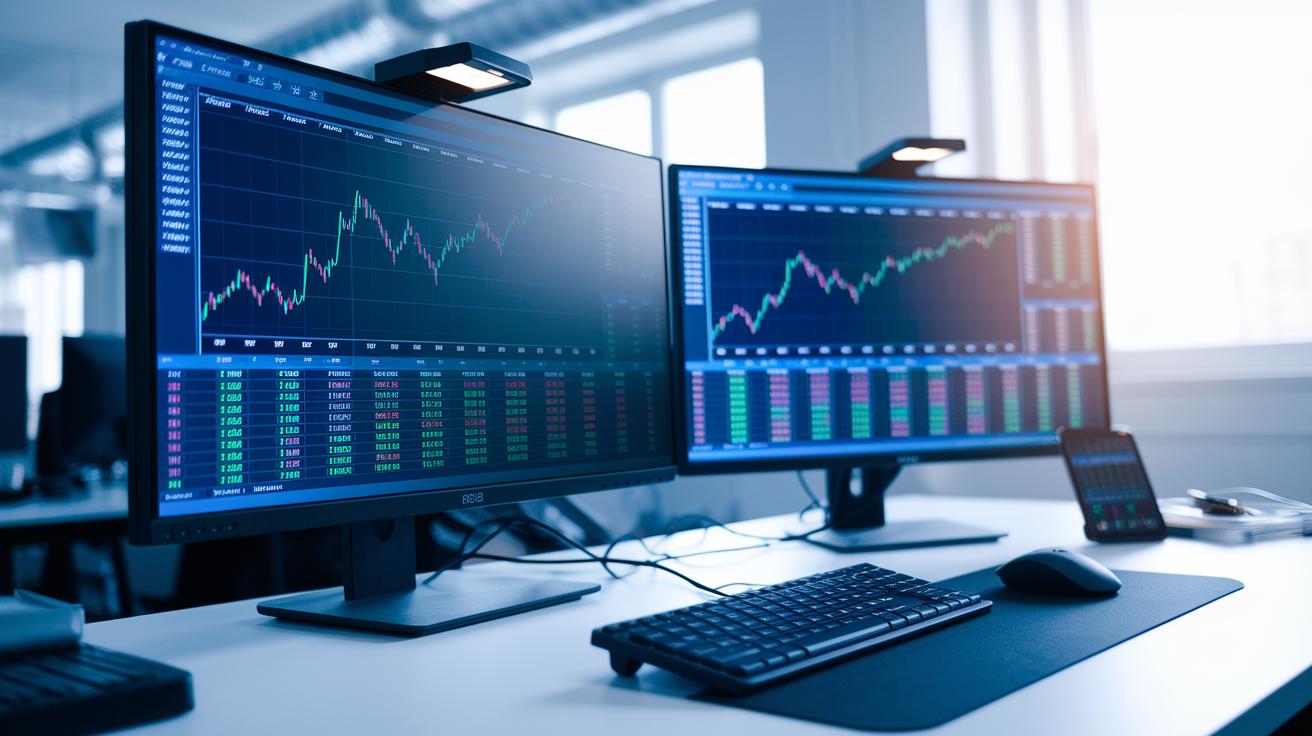
Desktop applications remain essential for active traders who need reliable tools and detailed analytics. Modern trading software offers multi-monitor setups and advanced charting so you can track several streams of data at once. Traders enjoy customizable dashboards that support in-depth analysis without slowing down performance. For example, a dual-monitor arrangement lets you watch live market data and detailed charts side by side during fast-moving sessions.
Mobile trading apps now mirror desktop capabilities with improved user experience. Top iOS and Android platforms offer synchronized watchlists, push notifications, and one-tap order placement. This means orders placed from a mobile device receive the same rapid execution as those from a desktop, assuring traders who monitor positions on the go.
Web-based platforms also play an important role by providing seamless browser access without the need for installations. They keep account information and trading data synchronized in real time across all devices. This integration ensures continuous connectivity and a unified trading experience, helping traders stay on top of market moves wherever they are.
Pricing Structures, Account Types, and Cost Analysis for Trading Software
Trading platforms use different fee models. Some charge a fee on each trade while others require a fixed monthly subscription that unlocks extra market tools. Traders can also choose among cash, margin, and retirement accounts. Margin accounts give extra leverage but come with interest costs. Cash accounts, on the other hand, have simpler fee structures. Understanding these differences helps traders align their costs with their trading frequency and risk appetite.
Low-cost platforms like IBKR Lite and Webull offer zero-commission trades and user-friendly interfaces that suit beginners and retail investors. Premium options such as IBKR Pro combine sub-penny pricing, fast execution, and advanced analytics for traders who need more features. For those seeking detailed technical tools, high-end charting packages like eSignal come with higher subscription fees. This cost-versus-value review helps traders find a platform that balances affordability and functionality.
Broker integration is designed to be quick and hassle-free. Many platforms let you complete account setup and fund transfers in about 15 minutes. Online forms and automated verifications cut down on manual work, meaning less downtime and more focus on trading strategies. Evaluating setup time and integration ease is important when choosing or switching trading software.
Final Words
In the action, we compared top platforms on performance, security, interface design, analytics, cross-device use, and cost structures. Each section broke down key features, from lightning-fast order execution to user-friendly dashboards, to help pinpoint the right match for varying trading styles.
This best trading software guide gives you quick insights and clear trade triggers. Armed with these details, you can act fast and make smarter decisions. The path ahead is bright, and your next winning trade might be just around the corner.
FAQ
What are the best free trading software options recommended by Reddit?
The best free trading software, as noted on Reddit, include platforms like IBKR Lite and Webull that offer commission-free trades, simple interfaces, and reliable market data.
Which trading platforms are ideal for beginners and day traders on PC?
The ideal platforms for beginners and day traders on PC are Webull, IBKR Lite, and IBKR Pro, which blend user-friendly design, intuitive dashboards, and fast order execution.
What are the top 10 trading platforms available?
The top 10 trading platforms combine features like low commission costs, advanced analytics, and real-time data, offering investors a range of options that suit different trading needs and strategies.
Can I make $1000 per day from trading?
Earning $1000 per day from trading depends on market conditions, strategy execution, and risk management, making daily profits uncertain and not guaranteed.
What does the 7% rule in stock trading mean?
The 7% rule in stock trading means that investors may target a 7% return to cover trading costs and risks, serving as a guideline rather than a strict requirement.
Is $100 enough to start day trading?
Starting day trading with $100 is generally not sufficient as it limits position sizes and risk management, and may not meet minimum regulatory requirements for active day traders.
Why is a $25,000 minimum equity required for day trading?
The $25,000 minimum equity is required for pattern day trading to provide a capital cushion for frequent trades and to meet regulatory safeguards, ensuring traders can cover potential losses.