
America’s job market shows early signs of improvement. Recent data indicate that conditions may be returning to normal. Unemployment climbed slightly from 4.2% to 4.3%, prompting economists to debate whether this reflects market stress or a gradual shift after recent volatility.
Historical trends and state-by-state comparisons add context to these numbers, helping us assess if the current data point toward stability and growth. This analysis reviews decades of patterns alongside today’s reports to explore whether progress is on the horizon.
National Overview of Current US Unemployment Rate
August's data shows the unemployment rate nudged up from 4.2% in July to 4.3% in August. According to the Bureau of Labor Statistics and LISEP, this small move may point to early stress in the labor market while also hinting at stabilization after recent volatility.
Key points:
- A small increase to 4.3% is drawing close attention from economists amid ongoing market adjustments.
- The report includes a note: "August's move to 4.3% could signal early signs of stress in the labor market, yet it also reflects market stabilization after previous volatility."
- A government shutdown pushed back the September employment report, fueling debate. The delay means more detailed monthly labor trends are expected soon.
- Analysts are watching state-by-state jobless comparisons and longer-term trends in workforce data. This helps gauge whether conditions will further deteriorate or stabilize.
us unemployment rate shines with progress

Historical worker data from 1948 to 2025 shows clear trends in the US labor market. Post-war figures hit high during downturns but gradually fell as policies and market conditions improved.
Recorded recession numbers now mix with forecasts to outline upcoming trends. A firm tracking data since 2010 uses past and yearly worker statistics to estimate figures through 2025. In earlier downturns, unemployment spiked before falling as recovery efforts took hold. Recent analyses now suggest a slow, steady decline, driven by market adjustments and policy actions.
This method blends decades of experience with real-time updates, offering investors and analysts a full view of labor market progress and a signal of further stabilization ahead.
Comparative State-by-State Unemployment Rate Analysis
Unemployment rates differ widely across the US, shaped by each state's unique economic factors. South Dakota's rate stands at 1.9% due to its strong agricultural base and community-focused economy. Meanwhile, North Dakota and Vermont each show a rate of 2.5%, suggesting a slower recovery in regions with less industrial diversity and fewer large urban centers.
Local industry concentration clearly impacts these figures. Rural states often benefit from stable, traditional sectors that keep job losses low, whereas states with both urban and rural areas experience more economic fluctuations. Smaller economies with limited high-growth industries are particularly sensitive to economic downturns, though they face fewer risks from rapid market changes.
Key takeaways:
- Small shifts in unemployment rates reveal local economic challenges or resilience.
- Ongoing employment data and historical trends help outline regional strengths.
- Investors and policymakers use this information to monitor economic momentum and adjust their strategies.
us unemployment rate shines with progress
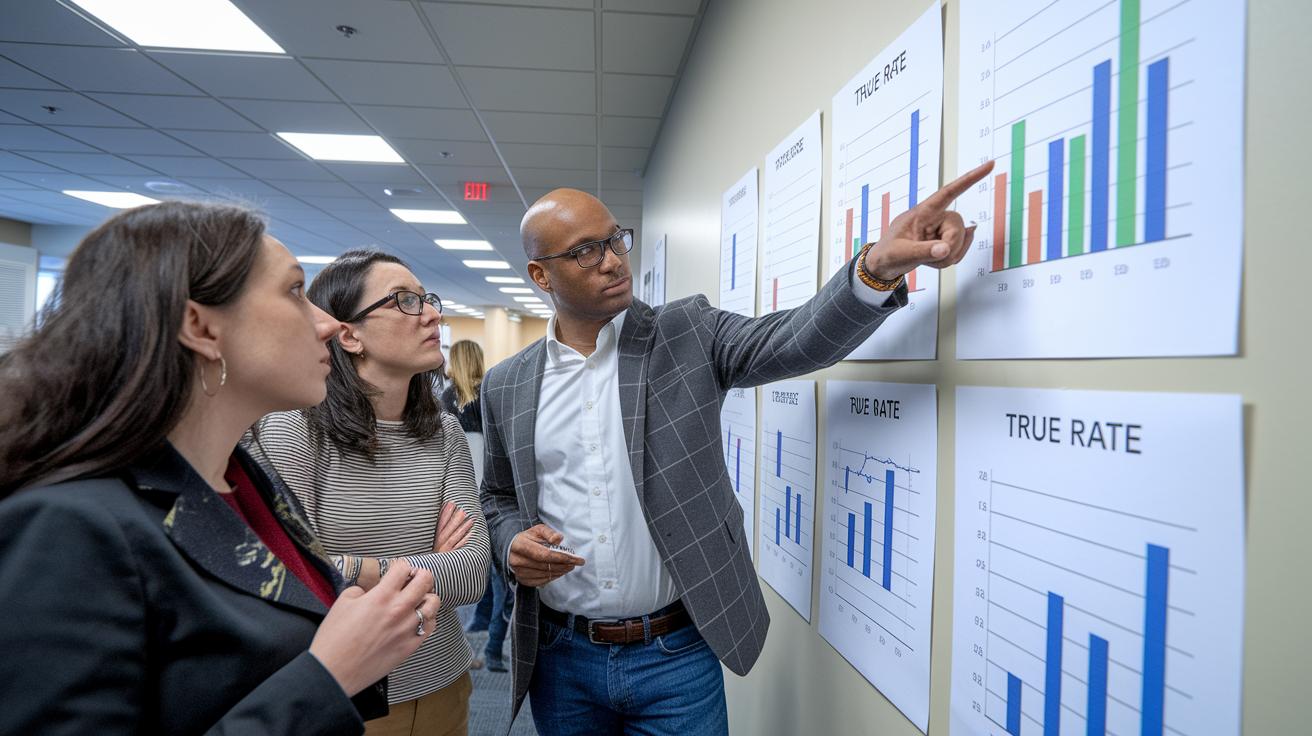
The official Bureau of Labor Statistics measure shows the percentage of people actively seeking work who are without a job. LISEP introduces its "True Rate," which tracks workers not logging full-time hours (35+ per week) who are either applying for jobs or earning less than a living wage of $26,000 in 2025 dollars. For instance, a recent review found that nearly 20% of part-time workers did not meet this wage benchmark, suggesting that traditional metrics can overlook a big part of the picture.
The True Rate brings fresh insight by highlighting underemployment missed by standard figures. By including workers who may qualify for benefits, LISEP’s approach offers a clearer view of labor market pressures. This method adds useful context to federal labor reports and helps policymakers spot hidden challenges.
Key points:
- BLS data excludes some underemployed workers.
- LISEP’s True Rate spots gaps by counting those earning below the threshold.
- Benefit rules shape how joblessness is measured.
Projections and Key Indicators for Future US Unemployment Rates
Future US unemployment figures hinge on a close look at historical trends and forward data through 2025. Data from 1948 to 2025 shows that past recessions often came with quick shifts in employment numbers. After a deep recession, policy changes helped recovery, but today's challenges could slow that rebound. A postponed September report caused by a government shutdown now delays key updates and adds uncertainty.
Forecast models merge updated workforce metrics with current jobless numbers and decades of historical data to highlight potential downturn signals. If new data shows rising underemployment, recovery predictions might temporarily adjust upward before leveling off. Analysts say that as key sectors change, unemployment rates could slowly decline toward more stable levels.
Watch for shifts in labor force participation and part-time work trends, as these can serve as early warning signs for broader market changes. The next report will refine these projections, offering clearer insights into national employment trends by balancing historical context with current market data.
Final Words
In the action, this piece covered the latest national trends, with the us unemployment rate ticking up to 4.3% in August. We mapped historical highs and lows, compared state jobless figures, and clarified how official measures differ from broader worker outlooks. We also projected what future indicators might signal through upcoming data releases.
All this helps sharpen the picture for anyone tracking job market shifts. Stay alert to emerging trends for faster, more informed decisions.
FAQ
How does the U.S. unemployment rate chart present current and historical data?
The chart displays current figures along with monthly and yearly trends, sourced from official reports like FRED, offering investors a clear view of changes in the U.S. labor market.
How is the U.S. unemployment rate broken down by state?
U.S. data breaks down jobless figures for each state, highlighting regional differences. For instance, South Dakota shows some of the lowest rates, while others reflect higher rates due to local economic conditions.
What is the U.S. unemployment rate for October?
October data is still pending official release. Investors should check the latest Bureau of Labor Statistics updates, as recent delays have affected the timely publication of monthly figures.
What are users saying about the U.S. unemployment rate on Reddit?
Reddit discussions center on the latest official figures, personal insights, and debates on economic trends, providing an informal perspective that complements formal data releases.
What is the current U.S. unemployment rate?
The current national unemployment rate stands at 4.3% as of August 2025, showing a slight increase from July and indicating ongoing shifts in the labor market.
What was the highest unemployment rate in U.S. history?
Historically, U.S. joblessness peaked above 10% during major economic downturns, such as the Great Depression, reflecting extreme stress in the labor market during significant crises.
Which country currently has the highest unemployment rates?
Some countries experience very high unemployment due to unique economic challenges, and rankings can vary over time; global comparisons depend on local conditions and current economic pressures.
What is considered a healthy U.S. unemployment rate?
A healthy rate in the U.S. generally falls between 3.5% and 4.5%, suggesting a stable labor market where most workers are employed without excessive inflationary pressure.