
US GDP Forecast Beats Expectations; Growth at 2.5% in Q4 2026
A new forecast shows that US GDP (gross domestic product) is expected to grow by 2.5% year-over-year in Q4 2026. This beats the 2.1% consensus estimate.
Key Factors:
- Strong consumer spending
- Robust production trends
These drivers point to a steadier economic recovery. By keeping an eye on this trend, investors can better understand the market shifts and adjust their strategies as needed.
US GDP Growth Forecast for Q4 2026
A Global Week Ahead report from February 13, 2026 shows US GDP is expected to grow 2.5% year-over-year in Q4, outpacing the consensus of 2.1%.
Key takeaway: Strong production trends and solid consumer spending are driving this higher growth forecast.
Highlights:
- The 2.5% projection builds on robust production and positive economic signs.
- Steady consumer spending is a key factor, supporting a stable recovery.
- The revised outlook signals that the US economy is outperforming prior, more modest projections.
This updated forecast gives market watchers clear evidence of continued strength, helping investors adjust strategies ahead of the year’s end.
US GDP Growth Promises Strong Economic Outlook
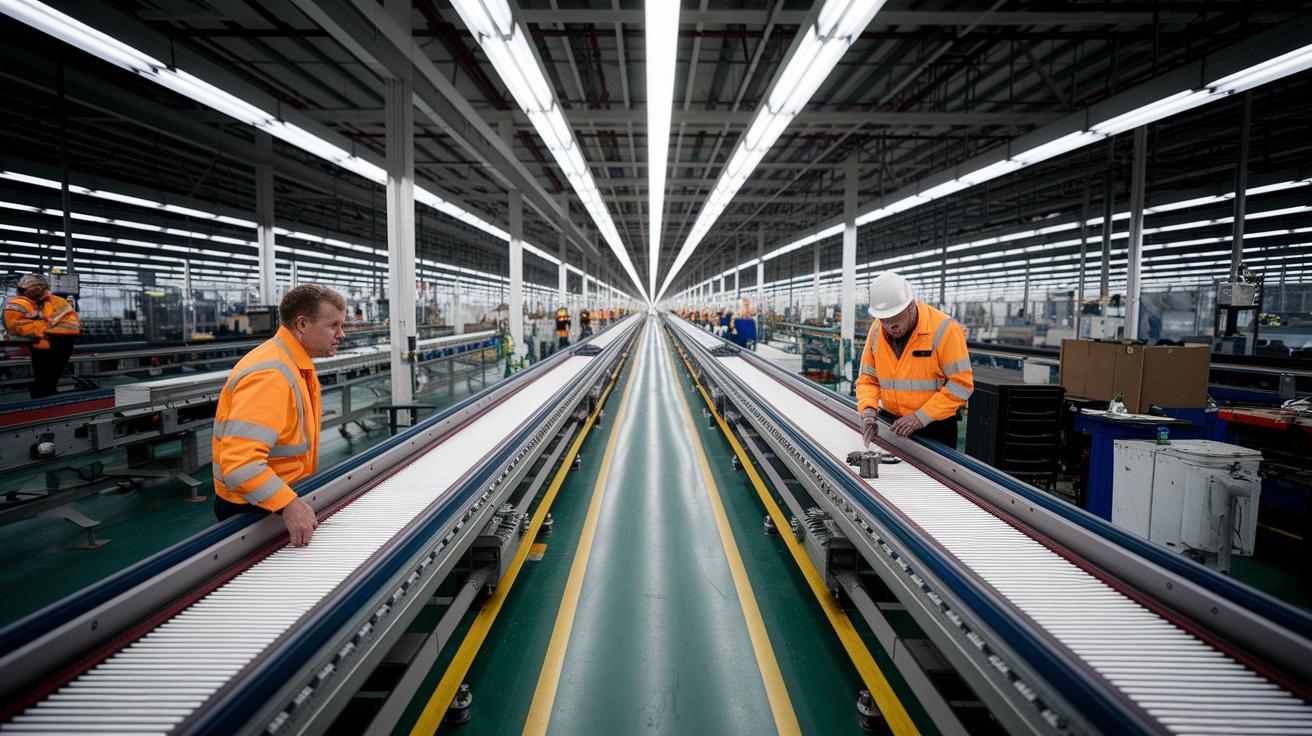
The baseline projection sees the US economy on a steady growth path with a stable tariff environment. Average tariffs, which were just over 10% in August, are expected to climb to about 15% by Q1 2026 and remain at that level until 2030. Strong production trends and solid business confidence reinforce this outlook.
In a downside scenario, a pullback in artificial intelligence investments could shrink real business investment by 2.1% in 2027 and lead to an additional 0.3% decline in 2028. These shifts may slow production and weaken overall economic momentum.
Conversely, an upside scenario suggests that revised trade deals could lower tariffs to 7.5% by the end of 2026 while stronger net migration adds roughly 1.7 million adults by 2030. A friendlier trade climate could boost business spending and consumer demand, fueling more robust economic recovery.
Investors should keep an eye on tariff adjustments, AI investment trends, and migration numbers, as these factors will likely shape both short- and long-term growth expectations.
Key Drivers of US GDP Growth in Recent Cycles
US consumer spending remains a primary force behind growth. In Q3 2026, real personal consumption rose 2.4% with durable goods up 3.1%, nondurable goods at 3%, and services increasing 2.2%. This steady demand fuels overall economic production.
The labor market is showing signs of cooling. Over the three months to November, nonfarm payroll gains averaged 22,000 monthly, down from 168,000 in 2024. Unemployment increased from 4.1% to 4.6%, suggesting that softer workforce conditions may shift consumption patterns.
In housing finance, 30-year treasury yields stayed above 4.4%, while mortgage rates eased to under 6.3% by early December after peaking over 7% in January 2025. This drop in rates likely helps improve home affordability, affecting both sales and related economic activity.
Business investment is fluctuating due to shifting policy incentives and economic cycles. Together, these factors, consumer spending, a cooling labor market, easing mortgage rates, and variable business investment, drive the evolving landscape of US GDP growth.
Sector-Level Contributions to US GDP Growth

The table below reveals fresh insights on how different sectors are impacting US GDP. It breaks down key trends to help you compare specific influences on growth.
| Sector | Key Metric | Latest Change |
|---|---|---|
| Consumer Spending | Real PCE | +2.4% in Q3; durables +3.1%, nondurables +3%, services +2.2% |
| Housing | Mortgage Rate | 30-year rate under 6.3% by Dec 5; previous yield never below 4.4% |
| Business Investment | Policy-Driven Fluctuations | Impacted by tax cuts and investment subsidies |
| Foreign Trade | Tariff Uncertainty | Tariff rate advancing from about 10% to 15% by Q1 2026 |
Key takeaways:
- Consumer spending shows varied resilience across durables, nondurables, and services.
- Adjustments in mortgage rates point to a focused attempt at improving housing affordability.
- Business investment remains unpredictable with ongoing policy shifts.
- Rising tariffs suggest a shift in trade costs that may affect manufacturing and exports differently.
These updated perspectives provide clear context for assessing each sector's role in GDP growth.
Impact of Fiscal and Monetary Policy on US GDP Growth
The One Big Beautiful Bill Act (July 2025) is set to boost the federal deficit by $3.4 trillion over 10 years – $4.1 trillion when debt service is included. Additional obligations of over $1 trillion are on tap for 2026–27, putting more pressure on government finances.
This policy aims to drive economic activity by funding infrastructure and other projects to support production and GDP growth.
Key factors:
- Increased spending is designed to fuel long-term economic expansion.
- Higher deficits along with potential rate adjustments could sway market sentiment.
- Lower interest rates cut borrowing costs, helping businesses invest and boosting consumer spending.
Meanwhile, inflation has softened, with headline CPI at 2.7% and core CPI at 2.6% in November. These milder readings give the Federal Reserve room to consider rate cuts, although inflation still sits above the 2% target. Lower borrowing costs may encourage investments and spending across the board.
Future Outlook for US GDP Growth Through 2030

The S&P 500 rose more than 12% this year, showing strong investor confidence that may boost US GDP growth despite gradual policy changes. A market rally acts as a clear signal of investor optimism, which can support steady growth.
Business investment and consumer spending are shifting in ways that extend beyond simple trade policies or migration numbers. This evolving sentiment highlights market confidence as a key driver for long-term growth.
Final Words
In the action, our analysis shows the forecast for Q4 2026 with US GDP growth at 2.5%, exceeding expectations.
We examined three scenarios shaped by evolving tariffs, shifting policy, and sector performance.
Key drivers like consumer spending, housing, and business investment emerged as crucial contributors.
Fiscal and monetary policy adjustments further tested economic resilience.
Positive trends and improving market conditions point to a hopeful outlook, as us gdp growth signals a robust economic pace moving forward.
FAQ
How has U.S. GDP growth evolved annually, including data from the last 10 years and since 1900?
The U.S. GDP growth trends vary by year, with long-term data showing cycles of expansion and contraction. Recent year-over-year figures reflect steady progress despite historical fluctuations.
What does U.S. GDP growth look like on a quarterly basis?
U.S. quarterly GDP growth reflects short-term economic shifts, highlighting subtle changes in production and consumption that help gauge the immediate state of the economy.
What is the forecast for U.S. GDP growth in 2026?
The U.S. GDP growth forecast for Q4 2026 stands at 2.5% year-over-year, driven by stronger-than-expected expansion in production trends as reported earlier in 2026.
Where can I find visual data on U.S. GDP growth trends?
Visual data is available via GDP growth charts and the FRED platform, which detail historical and current trends to help analyze the overall economic cycle and performance.
Is the USA GDP growing?
U.S. GDP growth remains positive, with both annual and quarterly data indicating overall economic expansion despite periodic slowdowns during economic cycles.
Did the U.S. economy improve under Trump?
The U.S. economy under Trump showed mixed results, with improvements in certain sectors and slower performance in others, leading to a nuanced impact based on various economic and policy factors.
Whose GDP is growing faster, the U.S. or China?
Historically, China’s GDP growth in percentage terms has outpaced the U.S. due to rapid development, though both economies experience shifts influenced by their unique economic conditions.
When was the last time the U.S. experienced negative GDP growth?
The most recent period of negative U.S. GDP growth occurred during recessionary spells in the early 2020s, offering historical context to assess current economic trends.