
Imagine catching risks before they affect your business. Risk assessment is more than a checklist. It is a clear method to identify dangers and estimate their impact early. This approach minimizes surprises and safeguards your valuable resources. In this article we outline simple steps to spot, evaluate, and mitigate risks so you can make informed decisions and protect your operations.
Fundamentals of risk assessment: Key Definitions and Benefits
Risk assessment helps companies spot and understand potential risks in projects or business activities. It involves checking for hazards and judging their likely impact. This clear process allows decision makers to reduce risk and make smart choices that keep operations smooth and rules in check.
It lowers the chance of unexpected events, boosts safety and efficiency, and strengthens compliance with industry rules. By uncovering issues early, organizations can avoid disruptions and protect valuable resources.
- Spot risks by gathering data on hazards and threats.
- Analyze risks with both simple observations and clear numerical data.
- Judge risks against set criteria to see their true impact.
- Tackle risks using practical and cost-effective solutions.
- Review risks regularly to ensure the strategies stay effective.
Risk management rests on three core ideas: Control, Communication, and Competence. Control means putting measures in place to limit possible harm. Communication ensures that everyone stays informed about new and changing risks. Competence is about having the right skills on board. Together, they pave the way for smart risk identification and efficient resource use.
Step-by-Step Framework for risk assessment

Defining Scope and Identifying Hazards
Begin by setting clear boundaries for your project. Gather data from internal reports, past incidents, and expert insights. Then, create a list of potential hazards, from supply issues to process breakdowns. For instance, a production delay might hint at deeper problems.
Assessing Likelihood and Impact
Next, rate each risk based on its chance of occurring and its possible impact. Use simple scoring or descriptive labels. If an event has a 40% probability with serious consequences, mark it on your scoring chart. This step clarifies both how often a risk might occur and its potential fallout.
Evaluating Risks Against Criteria
Compare your scores against preset tolerance levels. Risks that exceed these thresholds need immediate attention, while lower ones can be monitored over time. Clear decision rules help you prioritize effectively.
Selecting Treatment Options
Decide on the best approach, whether it’s reducing the risk, transferring it, accepting it, or watching it continuously. This might involve tightening controls, purchasing insurance, or changing operations. Think of it as targeted fixes to lessen vulnerability while keeping things on track.
Monitoring and Reviewing
Finally, update your hazard register regularly. Schedule periodic reviews to capture new threats or changes in conditions. This ongoing process ensures your risk management stays agile and effective.
risk assessment Methodologies and Comparative Tools
Choosing the right risk evaluation tool can help organizations brace for surprises and make smarter decisions. Different methods offer unique insights, from straightforward number scoring to detailed scenario reviews. The table below breaks down eight common techniques by their focus, how they work, and when they are most useful.
| Method | Description | Typical Use Cases |
|---|---|---|
| Risk Matrix | A color-coded grid that links the chance of a risk with its impact to help set priorities. | Used for strategic planning, project oversight, and daily operations. |
| Quantitative Models | Uses numbers and historical data to calculate risk scores and determine probabilities. | Ideal for financial risk assessment or when handling large datasets. |
| Qualitative Assessments | Relies on expert opinions and narratives instead of rigid numbers. | Best when risks are complex and not easily measured by data alone. |
| What-if Analysis | Changes key variables to examine how outcomes may vary in different situations. | Useful for planning and backup strategies under uncertain conditions. |
| Scenario Analysis | Explores several detailed future states by considering specific risk factors. | Applied in strategic planning and crisis management to prepare for varied outcomes. |
| Fault Tree Analysis | Breaks a complex system into parts with a visual map that shows how one failure may trigger another. | Common in engineering and safety-critical areas for detailed failure mapping. |
| FMEA | Systematically spots potential failure points and ranks risks by severity, likelihood, and detectability. | Widely used in manufacturing, healthcare, and design to improve reliability and safety. |
| HAZOP | Uses a structured team review to find process deviations and hazards for a complete safety check. | Often applied in chemical and industrial settings to boost process safety. |
Embedding risk assessment in Regulatory and Compliance Frameworks

Risk assessments help companies meet regulatory standards and maintain a safe work environment. They identify potential hazards and ensure compliance with industry rules and legal mandates set by agencies like OSHA and the U.S. EPA. Companies often use automated reporting tools and integrated EHS management systems to record control measures and maintain clear audit trails.
Regulations require detailed documentation of every step in the risk assessment process. Firms must keep records of hazard evaluations, safety audits, and incident management practices. This careful record-keeping not only protects workers and the environment but also minimizes financial and legal risks by quickly spotting any gaps in compliance.
Regular audits and reviews are vital to keep risk assessment protocols up to date. Scheduled evaluations help organizations refine their safety practices, verify control measures, and adjust incident management systems as regulatory landscapes evolve.
Best Practices and Common Pitfalls in risk assessment
Adopt an automated process to boost efficiency and clarity in risk management. Real-time dashboards let companies quickly track changes so no new threat slips by. Document every control measure, from mitigation steps to performance checks, to maintain a clear record and support regular reviews. Holding these reviews quarterly or after major incidents ensures your risk management stays accurate and up to date. With tight documentation and timely updates, teams can swiftly address emerging challenges.
Outdated risk registers mislead decision makers and can miss new hazards. When stakeholders are not involved, key insights into disruptions may be lost, weakening the assessment process. Inconsistent scoring methods also skew priorities by differing in how severity and likelihood are measured. Standardize your scoring with clear, predefined criteria, involve stakeholders with regular feedback sessions, and use modern automated tools for consistent data updates. These actions build a stronger risk management strategy and help drive operational success.
Visualizing and Communicating risk assessment Insights
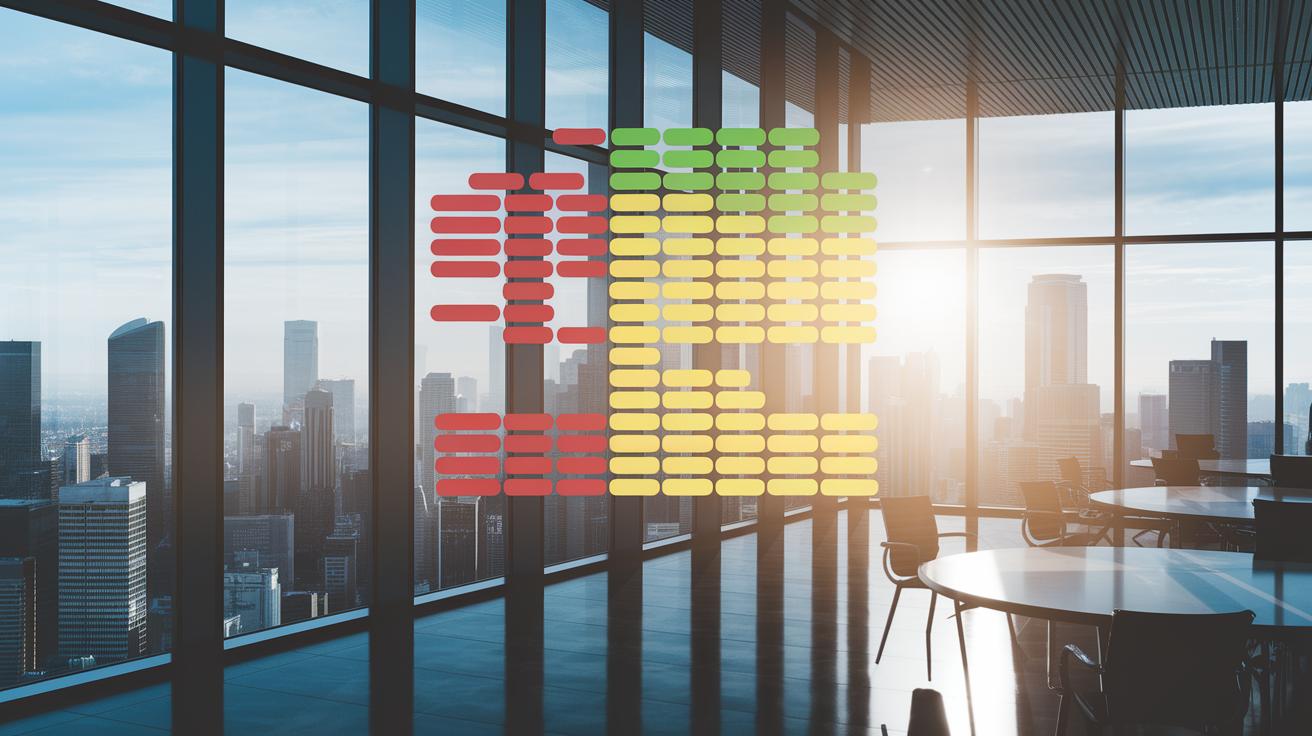
A probability-impact matrix is a simple tool that maps risk based on how likely it is to occur and how severe its effect might be. It uses red for high risk, yellow for moderate, and green for low risk to give a quick visual overview of vulnerabilities. Regular updates ensure that any new risks or changes are captured promptly, keeping decision makers informed.
Enterprise dashboards enhance visualization with real-time monitoring and integrated reporting. They bring together risk data from various sources and update automatically when conditions change. Clear indicators, such as red alerts for high risks, draw immediate attention to areas needing swift action. Interactive features let users dive into detailed data while still maintaining an overall view of the risk landscape, making risk management both simple and efficient.
Industry Applications of risk assessment: Case Studies
In financial services, risk assessment measures cyber attack vulnerability. Banks rate their exposure in dollars by scoring potential data breaches and operational disruptions. This targeted approach guides investments in cybersecurity and budget prioritization. For example, a small breach can cost millions, so early detection saves big.
In manufacturing, companies use risk assessments to identify operational hazards affecting equipment safety and production uptime. Detailed reviews help spot potential machinery faults or workflow interruptions. A plant might use sensor data and risk matrices to predict equipment failures before they occur, reducing downtime and boosting efficiency.
In healthcare, risk assessment shapes strategies to manage pandemic threats and maintain operations during crises. Hospitals and clinics run scenario analyses to balance patient safety with operational needs during outbreaks. These evaluations lead to resource reallocation and precautionary protocols, ensuring essential services remain uninterrupted.
Final Words
In the action, we broke down risk assessment fundamentals, from key definitions and benefits to step-by-step frameworks and industry case studies. We explored how qualitative and quantitative tools aid hazard evaluation and compared methodologies that streamline risk management. We also highlighted best practices and risk assessment integration in regulatory frameworks, offering clear examples and visual tools for effective communication.
This layered analysis arms investors with actionable insights and practical steps, fostering confidence in their decisions. Embrace these strategies to refine your risk assessment approach and drive positive outcomes.
FAQ
What is risk assessment software?
The risk assessment software refers to digital tools that automate, document, and analyze potential hazards. They streamline the process and support compliance by providing consistent risk evaluation and monitoring.
What is a risk assessment template?
The risk assessment template signifies a pre-formatted document that guides users in identifying, analyzing, and evaluating risks. It provides a structured format to ensure all key elements are addressed consistently.
What is a risk assessment example?
The risk assessment example represents a practical illustration of how risks are identified, analyzed, and managed. It often includes hazard registers or risk matrices that demonstrate the steps taken to mitigate threats.
What is a risk assessment PDF?
The risk assessment PDF refers to a document format that outlines risk evaluation processes. Typically, such PDFs include guidelines, checklists, or forms that are easy to share and review for compliance.
What does risk assessment mean?
The risk assessment meaning covers the process of identifying, analyzing, and evaluating potential hazards. This approach helps reduce exposure, ensures operational continuity, and supports compliance with safety standards.
What is a risk assessment test?
The risk assessment test entails an evaluation used to measure how effectively risks are identified and managed. It often involves simulations or checklists to verify that safety measures are in place.
What is a risk assessment audit?
The risk assessment audit involves reviewing risk management processes to ensure hazards are appropriately identified and controlled. This review helps confirm that organizational practices meet internal standards and regulatory requirements.
What are the 5 main steps of risk assessment?
The 5 main steps of risk assessment include identifying risks, analyzing hazards, evaluating risk levels, treating risks through control measures, and monitoring outcomes to ensure ongoing mitigation.
What are the 5 principles of risk assessment?
The 5 principles of risk assessment incorporate establishing control measures, clear communication, ensuring staff competence, continuous monitoring, and making sound decisions to manage risks effectively.
What are the 4 types of risk assessment?
The 4 types of risk assessment typically include qualitative, quantitative, semi-quantitative, and scenario-based approaches. These methods allow organizations to tailor risk evaluations to different operational contexts and data availability.