
Risk management frameworks protect your business by spotting problems before they hit. Current models use proven government guidelines to secure data and assets. This clear process supports better decision-making and lessens unexpected setbacks. Ultimately, it keeps operations running smoothly.
Understanding Risk Management Frameworks: Definition and Scope
Risk management frameworks provide a clear process to identify, assess, reduce, and monitor risks across cybersecurity, regulatory, and operational areas. Originally designed by the U.S. Department of Defense and later managed by NIST for government IT systems, these models now offer any organization a structured way to protect data and assets. They help leaders follow a methodical risk oversight approach that lessens breach chances and impacts.
The process starts by spotting potential risks. For example, when reviewing your technology stack, list vulnerabilities much like an engineer inspects each part of a machine before it starts. Next, use both numbers and descriptive analysis to rank these risks. Then, apply strategies that reduce or remove the highest threats and monitor continuously to ensure controls stay strong.
This systematic approach makes decision-making clearer and more consistent. When every part of the framework works well together, organizations not only secure critical systems but also enjoy streamlined decision-making that drives business success.
Key Components of a Risk Management Framework
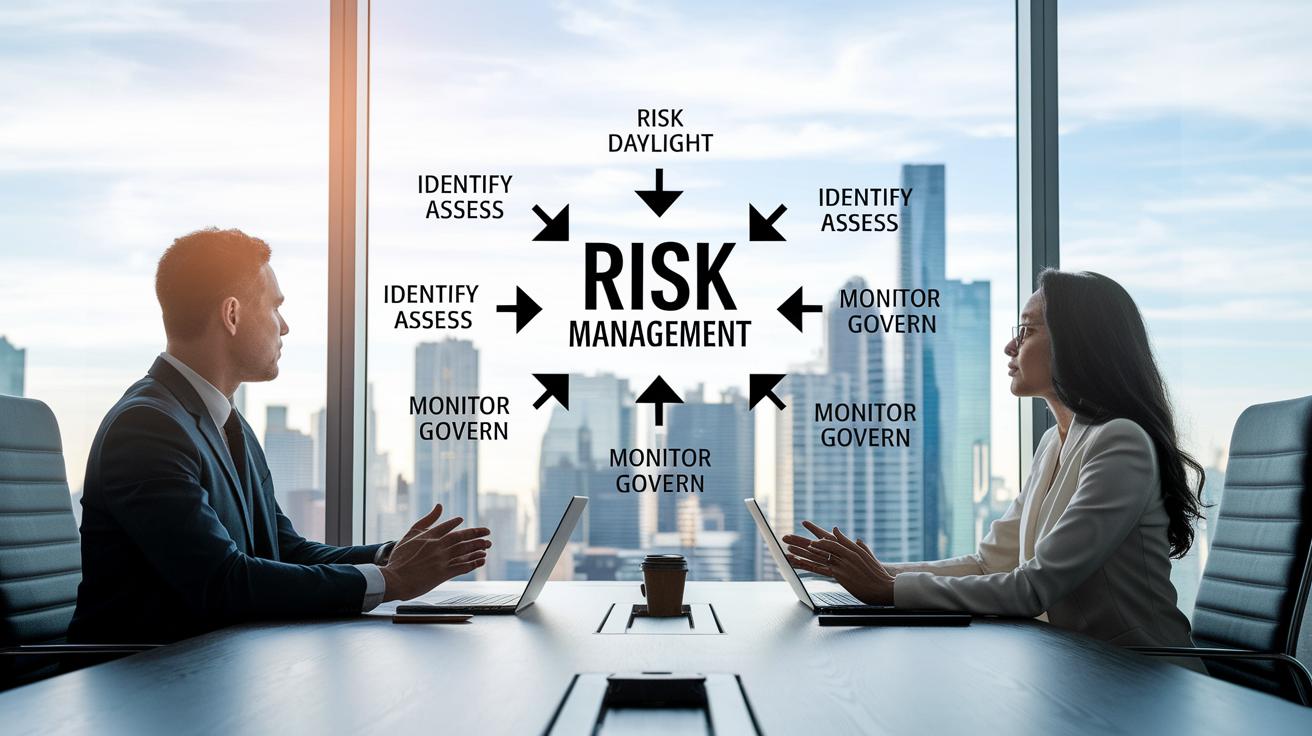
A solid risk management framework gives businesses the tools to spot potential hazards and react quickly to changes. It starts by pinpointing risks and then uses a series of steps to understand, measure, and address them before they disrupt operations.
Each step builds on the one before it. First, companies identify risks by evaluating threats, vulnerabilities, impacts, and likelihoods. Next, assessments use quantitative data and narrative insights to rank these risks. Then, mitigation efforts work to cut or remove those risks. Continuous monitoring and regular reports check that controls work as planned. Finally, governance makes sure the process sticks and evolves over time.
| Key Step | Description |
|---|---|
| Risk Identification | Evaluate threats, weaknesses, impacts, and likelihoods. |
| Risk Assessment | Rank risks using both numbers and qualitative descriptions. |
| Risk Mitigation | Take steps to reduce or eliminate identified risks. |
| Risk Monitoring and Reporting | Regularly track risk controls to ensure ongoing effectiveness. |
| Risk Governance | Ensure ongoing adherence to and improvement of the process. |
Combined, these components form a clear blueprint that helps managers spot and handle risks at every level. This repeatable method not only stabilizes operations but also supports smarter decisions and sustained business success.
Comparing Major Industry Standards for Risk Management Frameworks
Many risk management standards give companies a clear blueprint for handling cybersecurity and operational challenges. They help teams identify, rank, and tackle risks systematically. Leaders compare these frameworks to find one that fits their risk appetite and business goals. Managers often choose a model that cuts risks and sets measurable performance goals.
A quick look at six top standards shows each offers unique strengths:
- ISO 31000 provides flexible guidelines that work across industries.
- NIST Cybersecurity Framework focuses on cyber threats and now includes early guidance for artificial intelligence.
- COSO centers on companywide governance and control.
- FAIR brings a number-driven, finance-friendly perspective to risk.
- OCTAVE offers a structured approach for technology risks.
- TARA zeroes in on cyber vulnerabilities and gives clear advice for fixes.
| Framework | Focus | Origin | Key Features |
|---|---|---|---|
| ISO 31000 | Universal risk guidelines | International Standard | Adaptable principles, broad applicability |
| NIST Cybersecurity Framework | Cyber risk and controls | U.S. Federal Agencies | Detailed control measures, AI RMF draft |
| COSO | Enterprise risk oversight | U.S.-based | Governance integration, control objectives |
| FAIR | Quantitative cyber risk | Financial auditing roots | Data-driven analysis, economic metrics |
| OCTAVE | Information security risks | Carnegie Mellon SEI | Asset-centric identification, systematic process |
| TARA | Cyber vulnerability evaluation | MITRE | Focused weakness assessments, remediation guidance |
Organizations choose frameworks based on how well they match needs like flexibility, detailed analysis, governance, or technical focus. Leaders then select the standard that best supports their overall risk strategy and business priorities.
Risk Management Framework Powers Clear Business Success

Categorize Information Systems
Start by reviewing your IT systems and assigning impact levels based on confidentiality, integrity, and availability. This step ensures your most sensitive data and assets get the protection they need.
Select Security Controls
Use NIST SP 800-53 to pick baseline security controls that match your system’s category and risk appetite. By aligning controls with known vulnerabilities, you reduce risks in a focused and effective way.
Implement Security Controls
Roll out the chosen controls while documenting configurations, processes, and procedures. This documentation gives technical teams clear guidelines for routine maintenance and audit preparations.
Assess Security Controls
Test your controls with methods like vulnerability scans, audits, and performance reviews. Early identification of gaps lets you adjust quickly to keep your defenses strong.
Authorize Information Systems
Senior management reviews the assessment results and formally accepts any residual risks before the system goes live. This step confirms that the system meets required risk levels and compliance standards.
Monitor Security Controls
Establish ongoing monitoring through regular reviews and real-time checks to track control performance against emerging threats. Continuous oversight ensures your security measures adapt as new risks arise.
Customizing Risk Management Frameworks Across Industries
Organizations adjust standard risk frameworks to handle unique challenges. They use specialized tools and control measures to manage risks specific to each industry, ensuring processes and compliance needs are met.
Finance
Financial teams use quantitative risk checklists to evaluate credit, market, and liquidity risks. These checklists provide clear metrics on financial vulnerabilities and guide quick decisions in fast-paced markets.
Healthcare
Healthcare providers adopt custom assessment templates focused on patient data security, regulatory standards, and clinical safety. These tailored tools capture health-specific risks to keep patient information secure and ensure compliance.
Government
Government agencies follow oversight procedures designed to meet federal transparency and audit standards. Their customized frameworks emphasize clear reporting and structured controls to protect public data and maintain accountability.
Supply Chain
Supply chain managers use customized oversight schemes to address risks such as supplier reliability, product quality, and logistical disruptions. These control measures help monitor vendor performance and reduce production or distribution setbacks.
Cloud Services
Cloud service providers implement targeted evaluation plans centered on preventing data breaches, managing access controls, and clarifying shared responsibilities. Industry-specific adaptations help secure cloud platforms against evolving cyber threats.
Best Practices and Pitfalls in Risk Management Framework Adoption

Adopting risk management frameworks requires steady routines and a keen eye for common errors. Companies trim risk by automating control setups, keeping detailed records of security controls and impact reviews, and running regular training to keep teams sharp. Missing key support from leadership or clear communication can quickly derail these efforts.
Key actions:
- Automate control setup and monitoring to trim errors.
- Keep clear, detailed records of security controls and impact reviews.
- Schedule frequent training sessions to keep everyone up to date.
Pitfalls to avoid:
- Weak leadership backing.
- Insufficient training programs.
- Relying on outdated controls.
Building a strong framework means embracing continuous improvement. Embed automation in daily operations, review documentation during audits, and hold training regularly. Leaders need to actively support these steps and address gaps without delay.
Monitoring, Reporting, and Continuous Improvement in Risk Management Frameworks
Companies use automated systems that scan for new threats around the clock. Real-time alerts pick up unusual activity immediately, so small issues can be managed before they turn into bigger risks. This way, teams always stay aware of any new vulnerabilities.
Dashboards and clear measurement tools give leaders an on-demand view of risk levels. These real-time metrics simplify complex data. For example, a sudden spike on a risk dashboard might signal the need to review current controls. This fast feedback is essential in a rapidly changing threat landscape.
Regular review cycles help drive continuous improvement. Organizations periodically check risk controls, adjust tactics, and update their strategies. By reviewing at set intervals, they ensure that security measures keep up with market changes and emerging cyber risks.
Together, automated monitoring, dynamic analytics, and scheduled reviews build a system that adapts and strengthens over time.
Final Words
In the action, we explored how structured risk management frameworks guide organizations in spotting and handling risks. The discussion reviewed key components, industry standards, and hands-on implementation steps that help streamline risk oversight. It also covered how various sectors customize the approach and shared best practices along with common pitfalls. By adopting a sound risk management framework, market participants are better equipped to adjust quickly and make informed decisions. Positive progress and improved control could boost both confidence and portfolio resilience.
FAQ
Q: What is a risk management framework PDF?
A: The risk management framework PDF serves as a document outlining a structured approach to identify, assess, mitigate, and monitor risks. It provides guidance for creating a robust risk control model.
Q: What is a risk management framework template?
A: The risk management framework template is a preformatted guide that helps document risk identification, assessment, controls, and monitoring steps. It assists organizations in building an effective risk oversight process.
Q: What is a risk management framework example?
A: The risk management framework example shows a practical use of risk control methods. It details how organizations can systematically identify, assess, and mitigate risks while providing actionable insights for implementation.
Q: What is the NIST risk management Framework PDF?
A: The NIST risk management Framework PDF is a downloadable document from NIST. It explains a step-by-step approach for categorizing systems, selecting controls, implementing security measures, and monitoring risk.
Q: What is the risk management framework ISO 31000?
A: The risk management framework ISO 31000 provides international guidelines for risk assessment and mitigation. This framework offers principles to improve decision-making and strengthen overall risk control processes.
Q: What are the risk management framework steps?
A: The risk management framework steps detail phases such as risk identification, assessment, mitigation, monitoring, and governance. These steps create a systematic method to address vulnerabilities and manage risk.
Q: What does risk management framework certification mean?
A: The risk management framework certification identifies that an organization meets established standards. It confirms that structured risk control practices are in place and that the organization adheres to industry guidelines.
Q: What is the risk management framework army?
A: The risk management framework army refers to the process developed by the U.S. Department of Defense, later adapted by NIST. It standardizes risk identification and control practices, influencing broader organizational risk policies.
Q: What are the 5 components of the risk management framework?
A: The 5 components of the risk management framework include risk identification, risk assessment, risk mitigation, risk monitoring, and risk governance. Together, they form a complete system for controlling and overseeing risks.
Q: What are the frameworks for risk management?
A: The frameworks for risk management consist of systems like ISO 31000, NIST Cybersecurity Framework, COSO, FAIR, OCTAVE, and TARA. Each framework offers distinct guidelines to manage risks effectively.
Q: What are the 7 steps of RMF?
A: The 7 steps of RMF involve defining the system, categorizing information, selecting security controls, implementing controls, assessing effectiveness, authorizing the system, and continuously monitoring risk.
Q: What is the NIST 800-53 risk management framework?
A: The NIST 800-53 risk management framework provides a catalog of security and privacy controls for federal information systems. It guides organizations in choosing and implementing protective measures to mitigate identified risks.