
Wondering if your trading idea can survive real market conditions? Backtesting puts your plan through a practice run using historical data. This guide helps you set clear rules, gather years of market data, and simulate trades. Even new traders can use these steps to spot strengths and identify areas needing improvement. Test your idea today and build a smarter, more proven approach.
Step-by-Step Guide to Backtest a Trading Strategy
-
Define your trading idea and rules.
Begin with clear entry and exit guidelines. For example, you might set a rule to buy when the 50-day moving average crosses above the 200-day moving average and sell when that pattern reverses. -
Gather reliable historical data.
Collect price and volume information over a sufficient period, aim for 10 years or more for trend strategies. Clean your data by removing errors and adjusting for corporate actions. -
Run your simulation.
Use your preferred platform or programming language to apply your entry and exit rules. Make sure to simulate at least 30 trades, 50 is ideal, to ensure your results are statistically meaningful. -
Log every trade detail.
Keep track of profit or loss, trade duration, and any deviations from your plan in a log or spreadsheet. This record will help you assess overall performance. -
Analyze key metrics.
Review cumulative returns, annualized returns, volatility, Sharpe ratio, and maximum drawdown to understand risk and reward. Consider running walk-forward tests or scenario analyses to adjust for market changes. -
Refine and test again.
Use your findings to adjust your parameters and improve your strategy. Test repeatedly to ensure that your approach aligns with realistic trading conditions without risking actual funds.
Gathering and Validating Historical Market Data for Strategy Simulation
Reliable historical market data is key for a strong backtest. It must include accurate price, volume, and corporate actions from trusted vendors or brokers. For long-term strategies, use 10 to 15 years of data; trend-following models typically need about 10 years to capture major market cycles. For example, 12 years of refined data can highlight subtle market shifts.
TradingView's Bar Replay function lets you replay past price action in real time. It is useful for simulating historical conditions but may not handle multiple timeframes simultaneously, which can be a problem for strategies needing granular, interval-specific data.
Before running a simulation, check your data thoroughly. Look for missing bars, bad ticks, or jumps from survivorship bias (when delisted or bankrupt assets are excluded). Missing a gap in corporate actions is like skipping a chapter in a book, the story becomes incomplete. A careful data assessment ensures that your simulation mirrors real market conditions and provides a reliable foundation for tuning your trading strategy.
Selecting Optimal Timeframes and Tuning Strategy Parameters
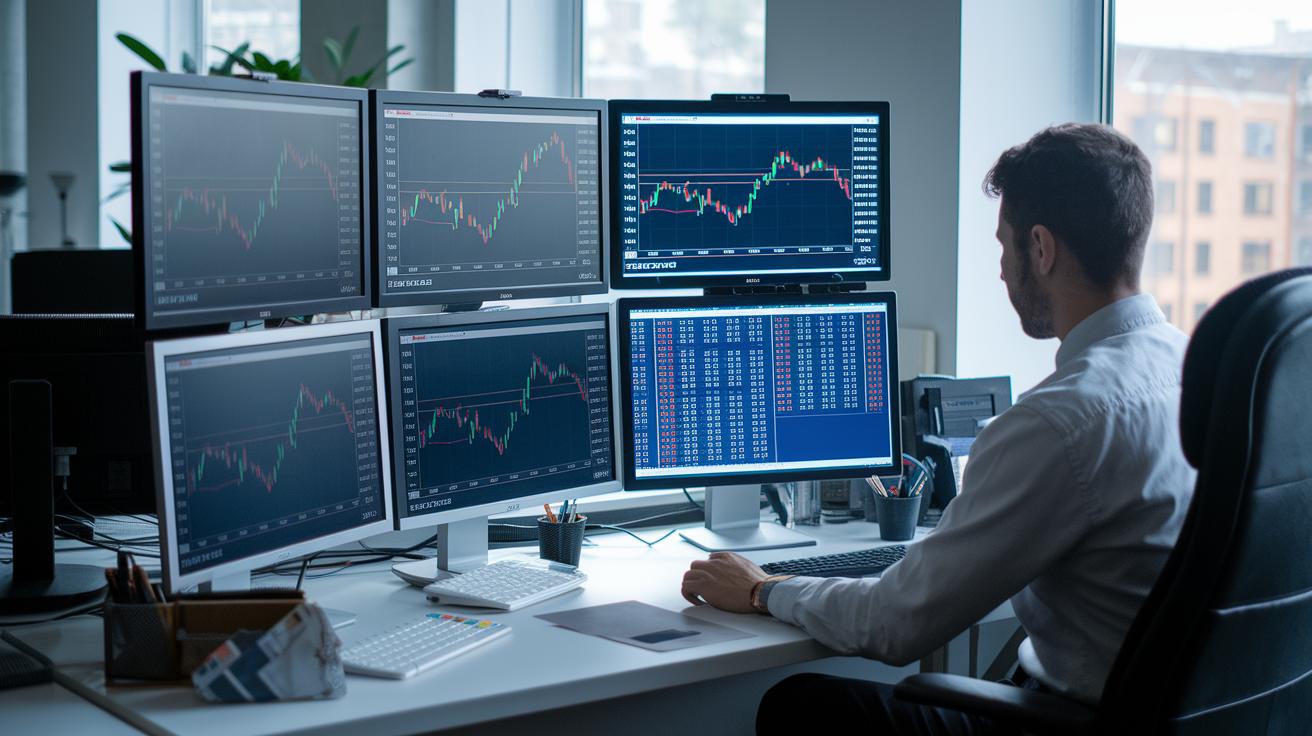
For dependable backtesting, picking the right timeframe is essential. Long-term holdings need about 15 years of historical data, while medium-term, trend-following strategies work best with at least 10 years. Spreading your tests over various sectors also reduces concentration risk and mirrors different market environments.
Tune critical parameters by trying different entry and exit points, moving average lengths, and stop-loss values. A straightforward sensitivity test, adjusting one setting at a time, ensures your strategy stays robust instead of being overly fitted to past trends. For example, start with the standard stop-loss setting and then widen the margin slightly to see if your trade signals still hold.
Key parameter tuning steps include:
- Experimenting with various entry and exit thresholds
- Adjusting moving average lengths
- Testing different stop-loss levels
A quick test could be: set a 50-day moving average, then try 55 days to check if your signals remain consistent. Fine-tuning these settings strengthens your strategy and helps avoid overfitting, leading to more realistic simulation results.
Implementing Trading Strategy Simulations with Python and Open-Source Frameworks
Python libraries let you turn historical data into clear buy and sell signals. For example, you can test a moving average crossover on Microsoft (MSFT) using data from Yahoo! Finance. You use pandas for handling data and NumPy for crunching numbers. A common method is to load price records, calculate the 50-day and 200-day averages, and then flag a trade when those averages cross.
Here's a sample code snippet:
import pandas as pd
import numpy as np

# Load data (ensure your CSV file contains Date and Close columns)
df = pd.read_csv('MSFT.csv', parse_dates=['Date'])
df['50_MA'] = df['Close'].rolling(50).mean()
df['200_MA'] = df['Close'].rolling(200).mean()
df['Signal'] = np.where(df['50_MA'] > df['200_MA'], 1, 0)
Matplotlib helps you visualize how your equity and averages change over time. Open-source tools like Backtrader simplify these simulations by letting you set up trade rules, track performance, and generate equity curve charts. To use Backtrader, you define a strategy class, feed in your data, and let the system trigger orders when the averages cross.
Alternatively, cloud-based platforms such as QuantConnect offer built-in market data and live research notebooks. Whether you work locally with Python libraries or shift to a cloud solution, the goal remains the same: simulate real market conditions and trade actions to test your strategy without risking real money. This approach lets you adjust key settings and see how different inputs change your performance.
Evaluating Backtest Results with Key Performance Metrics
Backtesting helps you understand how your trading strategy would have fared under past market conditions. Start by looking at cumulative returns, which show the overall gain during the test period, and annualized returns (%) that standardize performance over time. Also check annualized volatility (daily standard deviation multiplied by √252) to gauge how much your returns fluctuate.
Risk-adjusted measures matter too. The Sharpe ratio tells you if your returns compensate for the overall risk, while the Sortino ratio focuses on losses alone. Beta indicates how sensitive your strategy is to general market moves, and maximum drawdown shows the largest drop from a peak to a trough. Experts recommend using at least 30 trades for statistical confidence, though 50 or more is ideal.
Reviewing entry and exit performance with metrics like hit ratio, average win/loss, and trade duration can reveal needed improvements. Visual tools such as equity-curve plots and drawdown charts clearly illustrate periods of strength and vulnerability.
| Metric | Description |
|---|---|
| Cumulative Returns | Total gain over the backtest period |
| Annualized Returns | Yearly rate of return shown as a percentage |
| Annualized Volatility | Risk measure calculated as daily sigma multiplied by √252 |
| Sharpe Ratio | Return relative to overall volatility |
| Sortino Ratio | Return relative to downside risk |
| Beta | Measure of sensitivity to market moves |
| Maximum Drawdown | Largest loss from peak to trough during the test |
Reviewing these figures offers clear insights to help you adjust your trading model for future market conditions.
Avoiding Common Pitfalls and Biases in Strategy Backtests

Backtesting reveals possible strengths in a trading strategy but can also lead to misleading results if key pitfalls are overlooked. Ensure your simulation reflects real conditions by addressing these common issues:
- Overfitting: Test your model on different datasets and choose simple parameters. Avoid adjusting your system too perfectly to past data.
- Look-ahead bias: Stick to a strict timeline. Make sure your simulation never uses future data when evaluating past trades.
- Survivorship bias: Include assets that are no longer trading. This prevents an overly optimistic view by accounting for past failures.
- Trading costs: Factor in commissions, slippage, and fees. Even minor costs can chip away at returns over time.
- Execution delays: Model real order fill times and latency. This helps your strategy mirror challenges found in live trading.
Refining and Transitioning a Backtested Strategy to Live Markets
Start by paper trading your strategy. This lets you test your system on live feeds without risking any money. For example, run a small batch of simulated trades to ensure your stop-loss and take-profit points work as expected.
Next, fine-tune your risk controls. Adjust your stop-loss, take-profit, and trailing stops using feedback from both historical data and live tests. Keep refining these settings until your system can handle real market swings.
Stress test your strategy under extreme conditions. Simulate high-volatility events and deep drawdowns to check how your system responds when markets move sharply. You might, for instance, simulate a sudden 10% drop in asset price to ensure that your risk controls effectively limit losses.
Before switching to live trading, account for realistic slippage and execution costs. Include simulated delays in order fills and commission fees in your testing. There isn’t a magic number of backtests to run; thorough testing is key to building confidence in your strategy’s live performance.
Final Words
In the action, we detailed the step-by-step process: from setting clear entry and exit rules and validating historical data to running simulations with Python and refining parameters for robust outcomes. Each stage builds a clear system evaluation plan.
This guide provides practical insights to minimize biases and common pitfalls. It equips readers with realistic risk controls to transition from paper trading to live markets. Use these principles when learning how to backtest a trading strategy to improve your market approach.
FAQ
How to backtest a trading strategy reddit
The method for backtesting a trading strategy on Reddit involves reviewing community guides and shared scripts, then applying them with historical market data through platforms like Python or TradingView to simulate past trades.
How to backtest a trading strategy in TradingView
The process for backtesting a trading strategy in TradingView uses built-in features such as the Bar Replay and strategy tester. Users set entry and exit rules to simulate trades on historical data.
Backtest trading strategy free
The option to backtest a trading strategy for free utilizes platforms like TradingView and MT5. Open-source Python frameworks, such as Backtrader, also allow cost-free strategy simulation using historical market data.
How to backtest a trading strategy forex
The approach to backtest a forex trading strategy requires quality historical price data, clearly defined trade rules, and simulation on platforms like MT5 or specialized forex backtesting software to assess performance.
How to backtest a trading strategy using Python
The process for backtesting a trading strategy using Python involves employing libraries like pandas and NumPy for data management and Backtrader for simulation, allowing code-based assessment of trading rules.
How to backtest a trading strategy automatically
The approach to automatically backtest a trading strategy involves using algorithmic frameworks that run simulations on historical data with preset rules, streamlining the analysis process without manual intervention.
How to backtest a trading strategy on MT5
The method for backtesting a trading strategy on MT5 consists of loading historical data, setting clearly defined entry and exit conditions, and using the platform’s tester to simulate and record trade outcomes.
How to backtest for free
The way to backtest for free is by using platforms such as TradingView or MT5 with built-in testing capabilities, or by leveraging open-source Python solutions that simulate trading strategies using historical market data.
What is the best way to backtest a trading strategy?
The best way to backtest a trading strategy includes using reliable historical data, setting robust entry/exit rules, and executing simulations on trusted platforms or coding environments to generate meaningful performance metrics.
What is the 3 5 7 rule in trading?
The 3 5 7 rule in trading refers to a guideline regarding time frames or movement thresholds to confirm trade signals. It provides traders with a benchmark for evaluating trend strength and trade duration.
Can ChatGPT backtest a trading strategy?
The capability of ChatGPT to backtest a trading strategy is limited to offering advice and code examples. ChatGPT cannot perform actual simulations or analyze historical market data directly.
What is the 90% rule in trading?
The 90% rule in trading is a concept suggesting that most successful trades achieve gains close to 90% of a predetermined optimal target, serving as an efficiency metric for assessing strategy performance.